
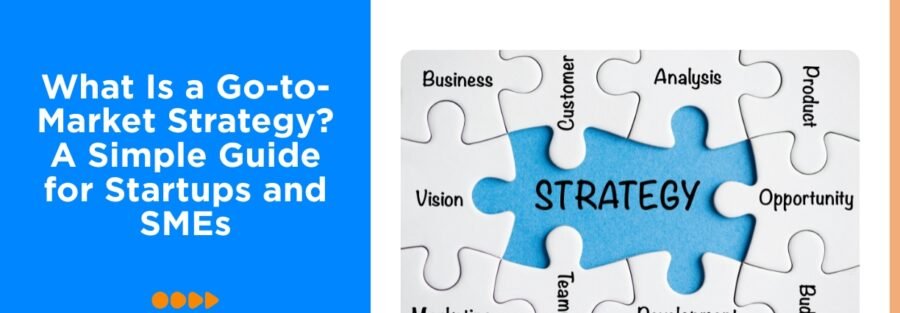
Imagine you’ve built a great product. You’ve invested time, money, and energy into it. But when it’s time to sell, nothing clicks. Customers don’t understand it, sales are slow, and marketing feels random. Sounds familiar? This is exactly where a go-to-market (GTM) strategy saves the day.
A GTM strategy is like a roadmap for launching and selling your product or service. For startups and SMEs, it’s not optional it’s essential. Without it, even the best ideas can fail. With it, you increase your chances of reaching the right audience, at the right time, with the right message.
What Exactly Is a Go-to-Market (GTM) Strategy?
A go-to-market strategy is a clear plan that explains how a business will deliver its product or service to customers and gain a competitive advantage. It answers simple but powerful questions:
Who are we selling to? What problem are we solving? How are we reaching customers? And why should they choose us?
Think of GTM as a bridge between your product and your customers. It connects product development, marketing, sales, pricing, and distribution into one focused plan.
GTM Strategy vs Marketing Strategy
Many people confuse a GTM strategy with a marketing strategy, but they’re not the same. A marketing strategy focuses mainly on promotion—ads, content, SEO, and campaigns. A GTM strategy is broader.
It includes marketing, but also covers pricing, sales channels, customer onboarding, and positioning. If marketing is the engine, GTM is the entire vehicle that gets you to your destination.
Who Needs a Go-to-Market Strategy?
Short answer: everyone. But it’s especially important for startups and SMEs. If you’re launching a new product, entering a new market, targeting a new audience, or changing pricing, you need a GTM strategy.
Big companies can afford mistakes. Small businesses usually can’t. A strong GTM strategy helps you avoid costly trial-and-error.
When Should You Build a GTM Strategy?
The best time to build a GTM strategy is before launching. But it’s never too late. If sales are stagnant or customer acquisition feels expensive, revisiting your GTM approach can unlock growth.
Core Elements of a Go-to-Market Strategy
Target Market and Ideal Customer Profile (ICP)
You can’t sell to everyone. Your GTM strategy starts by defining your ideal customer profile. Who benefits most from your product? Consider age, location, industry, company size, income, and behavior. The clearer this is, the stronger your strategy becomes.
Customer Pain Points and Needs
People don’t buy products—they buy solutions. Understanding customer pain points is critical. What problem keeps them awake at night? What frustrates them about current solutions? When your GTM strategy is built around real problems, conversion becomes easier.
Value Proposition Explained Simply
Your value proposition explains why your product matters. It should be simple, clear, and benefit-focused. If a customer can’t understand your value in 10 seconds, you’ve already lost them.
Product Positioning and Messaging
Positioning is how you want customers to perceive your product. Are you affordable? Premium? Fast? Reliable? Your messaging should consistently reinforce this position across your website, ads, sales calls, and content.
Pricing Strategy and Packaging
Pricing isn’t just about numbers—it’s about perception. A good GTM strategy defines pricing based on customer value, competitors, and costs. For startups and SMEs, flexible pricing models like freemium, subscriptions, or bundles often work well.
Distribution and Sales Channels
How will customers buy from you? Online? Through sales reps? Marketplaces? Direct or indirect channels? Choosing the right channel can make or break your GTM strategy.
Marketing and Promotion Plan
This includes SEO, content marketing, social media, paid ads, email marketing, and PR. Your GTM strategy ensures all these channels work together instead of in silos.
Sales Strategy and Enablement
Sales teams need tools, scripts, demos, and training. A GTM strategy aligns sales and marketing so leads don’t fall through the cracks.
Customer Journey Mapping
From awareness to purchase to retention, mapping the customer journey helps identify gaps and opportunities. This ensures a smooth experience at every stage.
Step-by-Step Guide to Build a Go-to-Market Strategy
Step 1: Define Your Target Audience
Be specific. The more focused your audience, the stronger your message will be.
Step 2: Research Your Market and Competitors
Understand trends, pricing, strengths, and weaknesses. Learn from others’ mistakes.
Step 3: Craft a Clear Value Proposition
Highlight benefits, not features. Keep it simple and customer-centric.
Step 4: Decide Your Pricing Model
Test pricing early and adjust based on feedback.
Step 5: Choose the Right Sales and Marketing Channels
Don’t try everything. Pick channels where your audience already spends time.
Step 6: Align Teams and Set Clear Goals
Marketing, sales, and product teams should work toward the same KPIs.
Step 7: Launch, Measure, and Optimize
A GTM strategy is never “done.” Measure performance and refine continuously.
Common Go-to-Market Strategy Mistakes to Avoid
- Targeting too broad an audience
- Weak or unclear messaging
- Ignoring customer feedback
- Overpricing or underpricing
- Poor alignment between sales and marketing
Avoiding these mistakes saves time, money, and energy.
Examples of Go-to-Market Strategies for Startups and SMEs
A SaaS startup may use content marketing and free trials to attract users, while a local SME may rely on referrals and local SEO. The strategy changes, but the foundation stays the same—clear audience, strong value, and focused execution.
How to Measure the Success of Your GTM Strategy
Track metrics like customer acquisition cost (CAC), conversion rates, lifetime value (LTV), churn rate, and revenue growth. These numbers tell you what’s working and what’s not.
GTM Strategy Tips for Startups and Small Businesses
- Start small and scale gradually
- Test messaging before full launch
- Focus on one core channel first
- Listen closely to customers
- Stay flexible and adapt quickly
Future Trends in Go-to-Market Strategies
AI-driven personalization, data-led decision-making, and community-based marketing are shaping modern GTM strategies. Startups that adapt early will have a competitive edge.
Conclusion
A go-to-market strategy is not just a business buzzword it’s a survival tool for startups and SMEs. It brings clarity, focus, and direction to your growth efforts. Whether you’re launching a new product or trying to scale, a well-planned GTM strategy helps you reach the right customers with confidence. Build it thoughtfully, execute it consistently, and refine it regularly for long-term success.